Walk through a village on Yap and you may pass huge stone discs standing upright beside a path or in front of a meeting house. Some are as small as a dinner plate; others are taller than a person. These are rai, the famous stone money of Yap.
Stone money is often described as a curiosity, but for Yapese people it is part of a living system of exchange, respect and history. Here is what rai are, where they came from, how they work and what they still mean today.
What is Yap stone money?
Yap stone money, called rai or fei, consists of large disc-shaped stones with a hole in the centre, carved from limestone quarried in Palau and carried by canoe to Yap. Rai were used for important social exchanges such as marriages, alliances and inheritance. Ownership is recorded by community memory, so stones rarely move.
Where did Yap’s stone money come from?
Yap has no suitable stone of its own, so the stones were quarried on the islands of Palau, across the open ocean to the south-west. Quarry sites were concentrated in a small area of southern Babeldaob and northern Koror, with a brief effort on Guam as well.
The legend of Anagumang
Yapese tradition says that around 500 to 600 years ago a man named Anagumang from Tomil was told by a divinity to sail with seven companions to a distant island where they found a sparkling stone. At first the stone was cut into shapes such as fish and turtles, but eventually the full-moon disc became the standard shape.
A dangerous journey
Cutting the stones and carrying them back by canoe across open ocean was hard, risky work. That danger is part of why the stones are valued: a stone’s story, including who brought it and whether lives were lost bringing it home, adds to its worth.
The O’Keefe era
In 1871 an Irish-American named David Dean O’Keefe was shipwrecked near Yap. He later helped Yapese bring rai from Palau in exchange for copra and trepang (sea cucumber). Quarrying largely stopped in the early twentieth century.
How big are rai stones?
Rai vary widely in size. Most are about 30 to 50 centimetres across, but they range from just 3.5 centimetres to 3.6 metres. The largest known stone, on Rumung island, is around 3.6 metres wide, half a metre thick and weighs about 4,000 kilograms. The central hole, roughly one sixth of the diameter, allowed a pole to be pushed through for carrying.
Around 6,000 large stones are reported to remain on Yap. A 1975 Smithsonian study by Cora Lee Gillilland catalogued 149 stones that had been taken off the island and were held in museums and private collections around the world.
How does Yap stone money work?
This is the part that fascinates economists. Because the largest stones are heavy and easily damaged, they are rarely moved. Instead, when a stone changes hands, the community remembers and recognises the new owner. Ownership lives in shared oral history rather than in physical possession.
A famous example is a stone said to have been lost at sea during transport. Because everyone agreed that the stone existed and who owned it, it was still regarded as valuable, even though no one could see it.
What gives a stone its value?
- Size – larger stones generally carry more prestige.
- Craftsmanship – how well the stone was shaped and finished.
- Colour and markings – stones with brown or white streaks were especially prized.
- History – who brought the stone, how it was obtained and whether people died bringing it home.
What was it used for?
Rai were not used for everyday shopping. They were reserved for significant social exchanges, including:
- Marriage arrangements
- Inheritance between generations
- Political deals and alliances
- Compensation, such as ransom for those killed in conflict
- Very occasionally, exchange for food
Why do economists talk about Yap stone money?
Because ownership is tracked by agreement rather than by moving the object, rai are often used to explain how money works. The economist Milton Friedman, writing in 1991, compared the Yapese system to gold held in the Federal Reserve Bank of New York’s vault, where gold can change owners without leaving the building.
Not everyone accepts these neat comparisons. A 2022 paper by Jo Lindsay Walton argued that many Western accounts of stone money are inconsistent and shaped by their authors’ own agendas. It is worth remembering that rai belong first to Yapese social life, not to economics textbooks.
Is Yap stone money still used today?
Yes, in a traditional sense. The US dollar is the everyday currency of the Federated States of Micronesia, but rai are still exchanged in customary ways among Yapese people. Stones stand in front of meeting houses, around village courts and along pathways, and some sites with many stones are known as stone money banks.
Rai are also a proud symbol of Yap and appear on Yap State licence plates. They are a reminder that each island in Micronesia has its own distinctive heritage. For more on how culture differs from island to island, see our guides to Micronesian traditional attire and the Chuukese skirt, and our explainer on Nan Madol, Pohnpei’s ancient stone city.
Key takeaways
- Rai are disc-shaped limestone stones quarried in Palau and carried to Yap.
- They range from a few centimetres to 3.6 metres across.
- Ownership is recorded in community memory, so large stones rarely move.
- Value depends on size, craftsmanship and, above all, history.
- Rai are still exchanged in traditional ways and remain a symbol of Yap.
Love island heritage? Explore our island T-shirts and Micronesian skirts, in sizes Small to 5XL.
Frequently Asked Questions
What is Yap stone money made of?
Rai are made of crystalline limestone. Older reports called it aragonite, but modern analysis has identified it as calcite. Stones with brown or white streaks were especially prized.
Why does Yap stone money have a hole in the middle?
The central hole, about one sixth of the stone’s diameter, let people push a pole through so the stone could be carried.
How much is a Yap stone worth?
Rai have no fixed price. Their value depends on size, craftsmanship and history, including who brought the stone and whether lives were lost transporting it.
Is Yap stone money still used?
Everyday purchases use the US dollar, but rai are still exchanged in traditional ways for important social occasions on Yap.
How many stone money pieces are on Yap?
Around 6,000 large stones are reported to remain on the island, and a Smithsonian study catalogued 149 that are held in collections elsewhere.
Sources and further reading
- Wikipedia: Rai stones
- Smithsonian Institution: Stone Money of Yap, A Numismatic Survey (Gillilland, 1975)
Shop the Collection
Handmade Micronesian skirts, muumuus and island wear in sizes S–5XL, shipped worldwide.
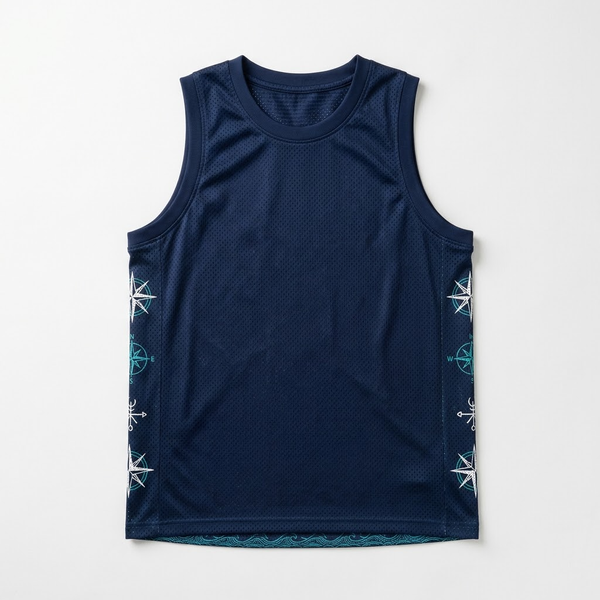
Wayfinder Mesh Basketball Jersey
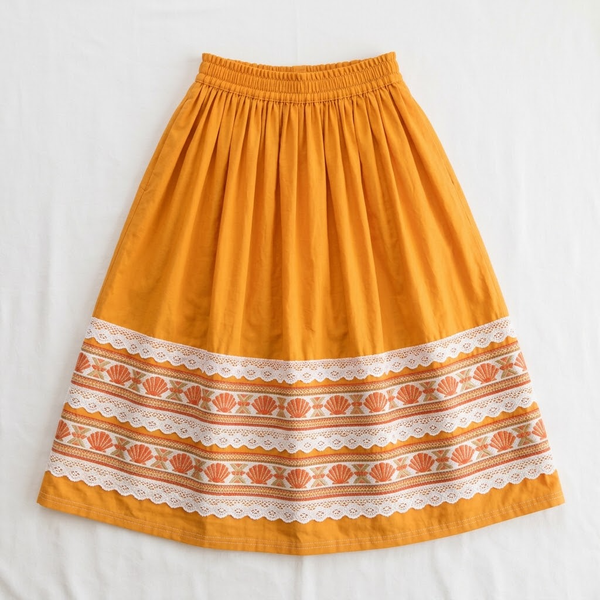
Original price was: $25.00.$20.00Current price is: $20.00.Sunrise Shell Micronesian Skirt
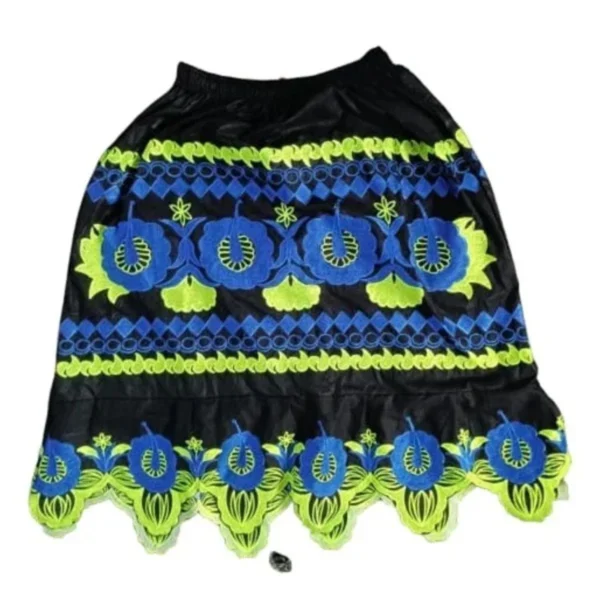
Original price was: $25.00.$20.00Current price is: $20.00.Garden of Eden Scalloped Micronesian Skirt
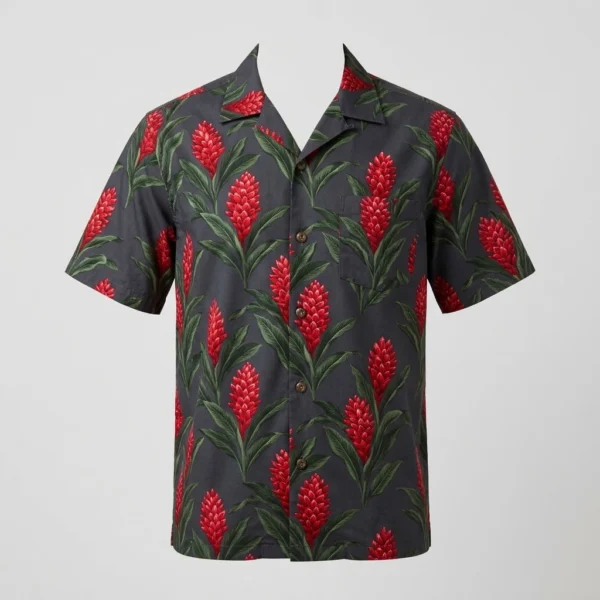
Original price was: $25.00.$20.00Current price is: $20.00.Red Ginger Men’s Aloha Shirt
Original price was: $22.00.$18.00Current price is: $18.00.