

If you have ever seen a black skirt covered in bright flowers at a Pacific Islander church or festival, you have probably seen a Pohnpeian skirt. Known in the Pohnpeian language as urohs, it is one of the most beloved garments in Micronesia. Here is what a Pohnpeian skirt is, where it comes from and what makes it special.
What is a Pohnpeian skirt?
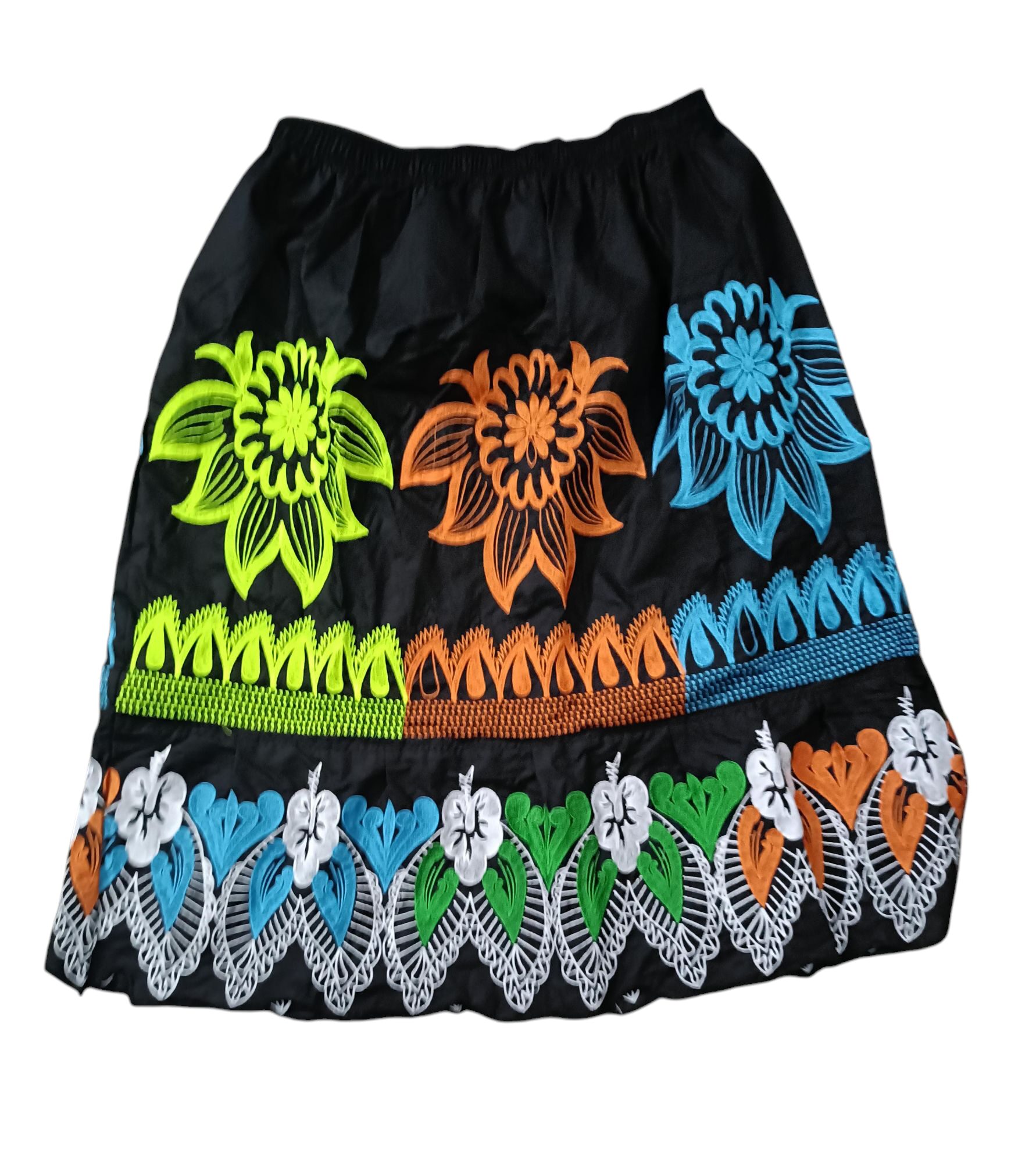
A Pohnpeian skirt (urohs) is a loose, ankle-to-mid-calf skirt from the island of Pohnpei in the Federated States of Micronesia. It is usually made on a dark base fabric and decorated with colourful designs of flowers, plants and symbols of island life. Most have an elastic waist, making them comfortable to wear all day.
The history of the urohs
The urohs began as the underskirt worn beneath the long, loose dresses that became common in the Pacific in the 1800s. Over time Pohnpeian seamstresses started decorating the skirt itself with designs connected to their heritage, and it became a garment in its own right. According to Pohnpeian poet and researcher Emelihter Kihleng, the embroidered urohs became popular with most Pohnpeian women in the 1970s and 1980s, as reported by Hawaiʻi Public Radio.
How traditional urohs are made
On Pohnpei, a seamstress draws the design on paper and transfers it to the fabric. Colourful layers are machine-sewn using an appliqué method, and the excess fabric is carefully cut away by hand to reveal the pattern — a technique known as cut-work. Depending on the design, a single handmade skirt can take a couple of days. Cut-work sessions are often social occasions where women gather and talk together.
Popular motifs
Traditional motifs include flower crowns, hibiscus, pineapple, breadfruit, candles, sakau (kava) and the sakau cup, and even mermaids. Modern designs also feature tropical leaves, sea turtles, geometric patterns and portraits. See our guide to Micronesian skirt designs for more.
When is the Pohnpeian skirt worn?
- Every day – for work, school and home.
- Church – a favourite for Sunday services.
- Feasts and celebrations – weddings, birthdays and community events.
- Funerals and family gatherings.
- As a gift – skirts are often given to mothers, relatives and friends.
Pohnpeian skirts and culture today
The urohs is more than clothing — it is a contemporary art form for Pohnpeian women and an important source of income for many seamstresses on the island. Handmade skirts from Pohnpei often sell for over $100. If you are visiting Pohnpei or want a one-of-a-kind piece, buying directly from local seamstresses is a wonderful way to support the tradition.
Pohnpeian-style skirts at Ayaabi
At Ayaabi we offer affordable Pohnpeian-style skirts inspired by these beloved designs, with a lightweight fabric, elastic waist and sizes from Small to 5XL. They are ideal for everyday wear, church, family events and matching outfits — and we ship worldwide.
Frequently asked questions
What does urohs mean?
Urohs is the Pohnpeian word for skirt, and it is used for the island’s famous decorated skirts.
What is the difference between a Pohnpeian skirt and a Micronesian skirt?
“Pohnpeian skirt” refers to the style from the island of Pohnpei. “Micronesian skirt” is a broader name often used in the US for colourful island skirts from across Micronesia.
How long is a Pohnpeian skirt?
Most are long, reaching from mid-calf to the ankle, with a loose, flowing shape.
How do I care for my skirt?
Wash gently in cold water and hang to dry. Read our full skirt care guide.


