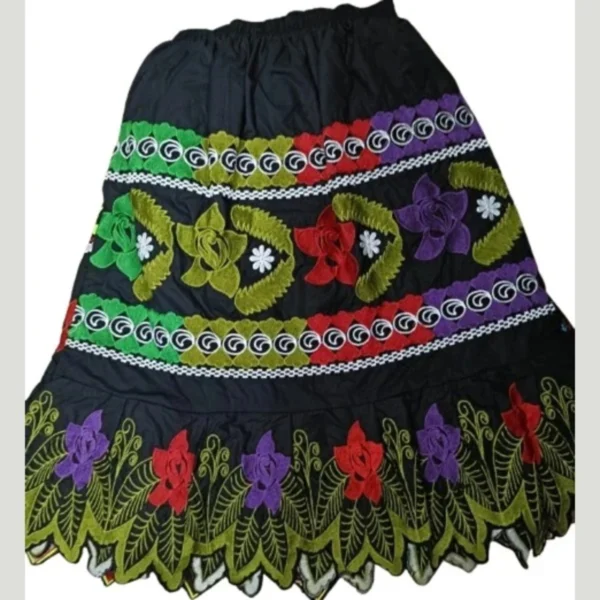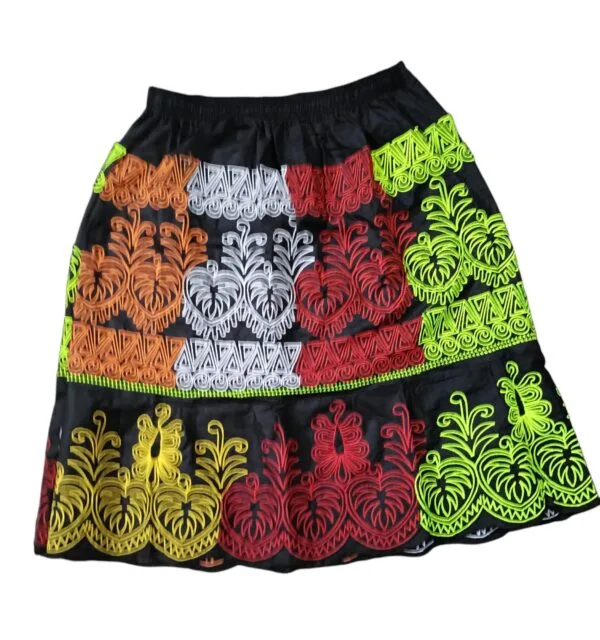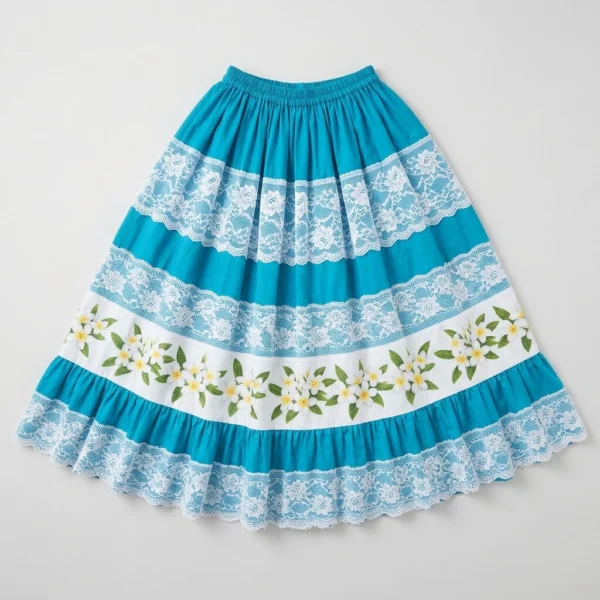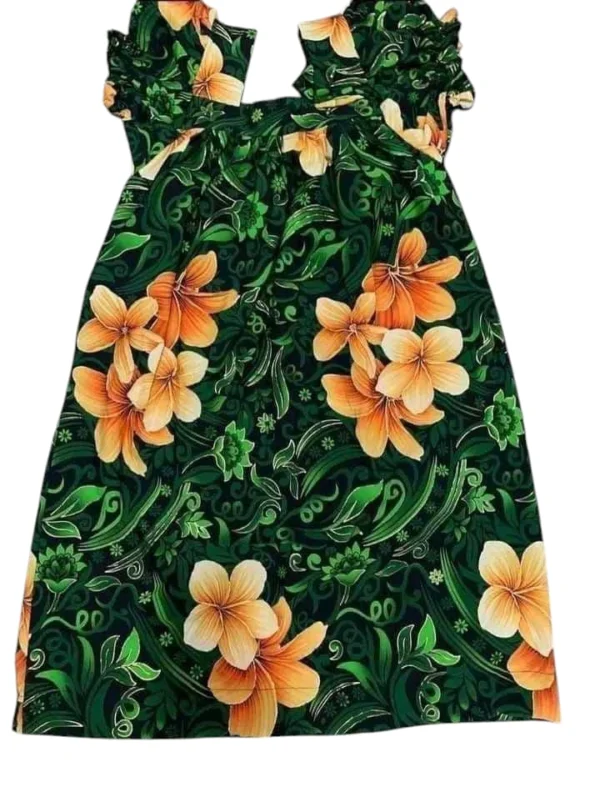
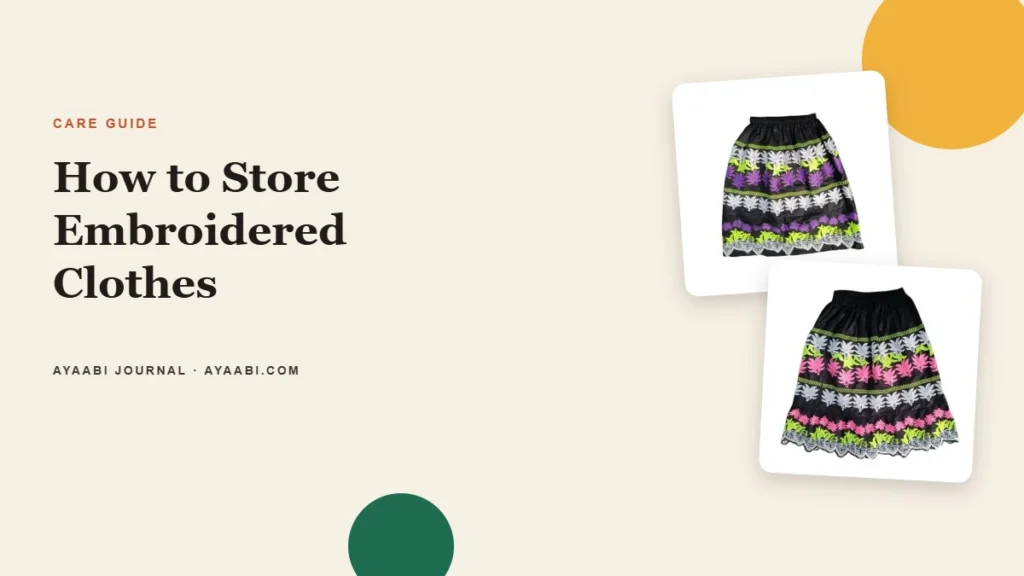
Embroidered clothes take more care than everyday basics. The raised stitching, lace edges and bright threads that make a Micronesian-style skirt so special are also the parts most likely to crush, snag, fade or pucker when they sit in the wrong place for months.
The good news is that museums have spent decades working out how to keep textiles safe, and most of their advice translates easily to a home wardrobe. This guide explains how to store embroidered clothes so they stay bright, flat and ready to wear for the next church service, wedding or family celebration.
How should you store embroidered clothes?
Store embroidered clothes clean, dry and out of the light, in a cool room with steady temperature. Fold them as little as possible, pad any folds with clean cotton or acid-free tissue, keep heavy items off the top, and avoid sealing them in airtight plastic. Check and refold them every few months.
Each of those steps has a reason behind it, and understanding the “why” makes it easier to adapt the advice to your own home and climate.
Why do embroidered clothes need special storage?
Embroidery adds thread, texture and sometimes lace or trim to a base fabric. That creates a few weak points:
- Folds: the Western Australian Museum’s textile storage guidance warns that textiles eventually split along folds. A sharp crease across embroidery puts extra strain on the stitches.
- Crushing: raised stitching flattens under weight, and lace or scalloped edges can bend out of shape.
- Light: the Smithsonian notes that light damages both plant and animal fibres, so bright threads can fade if left near a window.
- Dust and dirt: according to the Smithsonian, dust can cut fibres through abrasion over time.
- Damp: moisture invites mildew and musty smells, especially in humid island climates.
If you have invested in a beautiful skirt for a special occasion, a little planning now protects it for years.
What should you do before putting embroidered clothes away?
1. Clean them first
Never store a garment that has been worn, even once. Body oils, perfume, food spots and sweat can set over time and attract insects. Wash or clean the item according to its care label. The Smithsonian suggests storing washable items unstarched; skip fabric conditioner build-up for the same reason. Our guide on how to wash and care for Micronesian skirts covers gentle washing step by step.
2. Make sure they are completely dry
Even slight dampness inside a thick embroidered band can lead to mildew. Air-dry flat or on a line in the shade and wait until the stitching feels fully dry before you fold anything.
3. Check for damage and pests
Look over the hem, waistband and embroidery for loose threads or small holes. Fix them now, because a loose stitch tends to grow once the garment is folded and moved. Museum guidance also recommends checking textiles for insects before they go into storage.

Is it better to fold or hang embroidered clothes?
For most embroidered skirts and dresses, folding flat with padding is safer than hanging. The Smithsonian recommends storing costumes flat when possible, and conservators at Brigham Young University advise against hanging heavy or heavily embellished garments, because the weight drags on the shoulders or waistband.
How to fold embroidered clothes
- Lay the garment on a clean surface, embroidery facing up.
- Place a layer of acid-free tissue or a clean white cotton cloth over the embroidery.
- Fold along natural lines such as side seams, keeping folds away from the embroidered band where you can.
- Put a soft roll of tissue or cotton inside each fold so it curves rather than creases.
- Avoid folding in exactly the same place every time; the BYU guidance notes that refolding on old lines reinforces creases.
When hanging is fine
Lighter, well-made dresses with strong shoulder seams can hang. Use a wide, padded hanger rather than thin wire, and leave space in the wardrobe so garments are not squashed together. For skirts, the BYU conservators suggest supporting heavier pieces with loops of tape at the waistband rather than clipping them, which can leave marks.
Where is the best place to store embroidered clothes?
The Smithsonian advises a clean, cool, dark and dry space with stable conditions, and suggests around 18–21°C (65–70°F) and 40–50% relative humidity. It specifically recommends avoiding attics and basements, which swing between hot and cold or damp and dry.
In practice, an internal wardrobe or a chest of drawers in a bedroom is usually better than a garage, shed or under-house storage. Keep it away from exterior walls, bathrooms and windows.
A note for humid island climates
If you live in Guam, Hawaii or the FSM, humidity is the biggest enemy. The Smithsonian’s Museum Conservation Institute notes that in humid sub-tropical regions, cotton sheeting and acid-free papers should be used sparingly to avoid mould. Air-conditioned rooms help, and taking clothes out to air on a dry day is worth the effort.
Should you store embroidered clothes in plastic?
It is tempting to seal special outfits in plastic bags or vacuum bags, but this is one habit to break. The Smithsonian advises against sealing fabrics in airtight plastic and notes that some plastics give off fumes as they age. Sealed bags can also trap moisture, which leads to mildew.
Better options include:
- Clean white cotton: an old pillowcase or sheet makes a breathable garment bag.
- Acid-free tissue: ordinary tissue and coloured paper can be acidic and may stain fabric over time. The Museum Conservation Institute recommends neutral, unbuffered acid-free tissue for mixed collections.
- Breathable boxes: a clean, sturdy box lined with cotton or acid-free tissue, large enough that the garment does not need tight folding.
Avoid storing garments directly against bare wood drawers, which can stain fabric; line the drawer with cotton or tissue first.
How do you keep embroidered clothes safe long term?
Storage is not “set and forget”. A quick check a few times a year keeps problems small.
- Air them out: remove the garments, shake gently and let them breathe for a few hours.
- Refold differently: change where the folds fall so the same threads are not under strain.
- Look for warning signs: musty smells, spots, small holes or insect casings.
- Keep the heaviest items at the bottom: museum guidance recommends one garment per box where possible, and heavier items below lighter ones if you must stack.
If you are building a collection of island wear, from Pohnpeian urohs to muumuus, it helps to keep a small “special occasions” drawer just for them, as the Smithsonian suggests for heirlooms.
Key takeaways
- Always clean and fully dry embroidered clothes before storing.
- Fold flat with padding; hang only light garments with strong seams on padded hangers.
- Choose a cool, dark, dry room. Avoid attics, basements and garages.
- Use cotton or acid-free tissue, not sealed plastic.
- Air and refold every few months, changing the fold lines.
Frequently Asked Questions
Can I store embroidered clothes in vacuum bags?
It is best not to. Vacuum bags compress raised embroidery and lace, and airtight plastic can trap moisture. A breathable cotton bag or a tissue-lined box is safer.
Should I iron embroidered clothes before storing them?
No. The Smithsonian suggests storing washable textiles unironed and unstarched. Iron them gently when you are ready to wear them instead.
How do I stop embroidered clothes from getting musty?
Make sure they are completely dry before storage, keep them in a cool, dry room, avoid sealed plastic and take them out to air every few months.
Is it okay to hang an embroidered skirt?
Light skirts can hang if you use a padded hanger or waistband loops, but heavily embroidered or heavy skirts are safer folded flat with tissue in the folds.
What tissue paper is safe for clothes?
Use acid-free tissue. The Smithsonian’s Museum Conservation Institute recommends neutral, unbuffered acid-free tissue for general textile storage, as regular tissue can be acidic.
Looking for a new piece to add to your collection? Explore our Micronesian-style skirts, available in sizes Small to 5XL, or read about Micronesian skirt designs and patterns.
Sources and further reading
- How do I store antique textiles at home? – Smithsonian Institution
- Acid-free tissue paper for textiles – Smithsonian Museum Conservation Institute
- Textile storage – Western Australian Museum
- Preservation storage for textiles – BYU Conservators
Shop the Collection
Handmade Micronesian skirts, muumuus and island wear in sizes S–5XL, shipped worldwide.
Premium Green & Purple Embroidered Micronesian Skirt
Original price was: $100.00.$70.00Current price is: $70.00.Patchwork Botanical Pohnpeian Skirt
Original price was: $25.00.$20.00Current price is: $20.00.Lagoon Lace Chuukese Skirt
Original price was: $25.00.$20.00Current price is: $20.00.Green Plumeria Muumuu Dress
Original price was: $20.00.$18.00Current price is: $18.00.