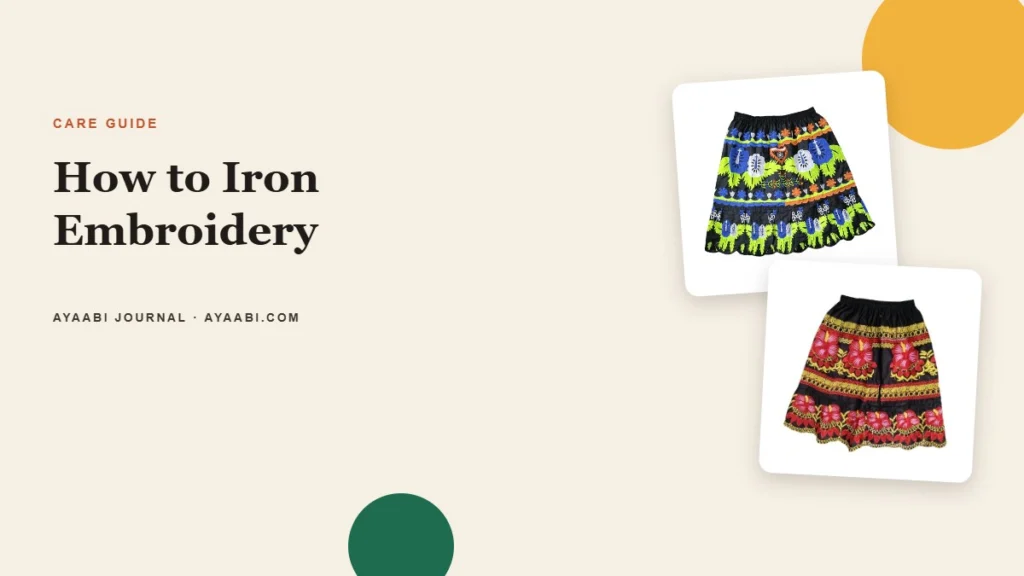
Nothing spoils a beautiful embroidered skirt faster than a hot iron pressed straight onto the stitching. Threads flatten, shiny marks appear, and in the worst cases synthetic thread can melt or the fabric around it puckers.
Yet a wrinkled skirt does not look its best either, especially for church, a wedding or a family photo. This guide explains how to iron embroidery safely, using simple methods recommended by textile and home-economics experts, so the design stays raised, crisp and bright.
How do you iron embroidery without flattening it?
To iron embroidery safely, turn the garment inside out and lay the embroidered area face down on a thick, folded towel. Set the iron to the temperature for the most delicate fibre, use a pressing cloth, and press with a gentle lift-and-lower motion instead of sliding. The towel cushions the stitches so they stay raised.
That is the core method. Below we go through each step, what to do with different fabrics, and the mistakes that cause most ironing damage.
Why does embroidery need special ironing?
Embroidery sits on top of the base fabric. When you iron the right side directly on a hard board, the iron squashes those raised threads flat and can leave a shine. New Mexico State University’s guide to pressing notes that too much heat, steam or pressure can dull or flatten a fabric’s surface, and that embroidered, embossed and quilted fabrics should be pressed from the wrong side over thick padding such as a Turkish towel.
Embroidered garments are also often made from more than one fibre: a polyester or cotton base, with polyester, rayon or cotton thread. Each fibre has a different heat limit, which is why the temperature setting matters.
What temperature should you use to iron embroidery?
Always start with the care label. According to the Government of Canada’s guide to care symbols, the ironing symbols set maximum temperatures:
- Low (up to 110°C): acetate, acrylic, nylon, spandex and similar synthetics.
- Medium (up to 150°C): polyester, rayon, silk and wool.
- High (up to 200°C): cotton and linen.
- Iron crossed out: do not iron or press at all.
On many labels and irons these settings are shown as one, two or three dots. NMSU’s guidance is to set the iron for the fibre that needs the lowest heat when a garment is a blend. So if a cotton skirt has polyester embroidery thread, use the medium setting, not high. If there is no label, start low and test on a hidden area such as the inside of the hem.
How to iron embroidery step by step
What you need
- An iron with adjustable temperature (and steam, if the label allows it).
- A thick, clean, light-coloured bath towel.
- A pressing cloth: a clean cotton tea towel, handkerchief or piece of muslin.
- A spray bottle of clean water.
The method
1. Check the label and set the iron to the right temperature. Let it heat fully.
2. Fold the towel into two or three layers on your ironing board.
3. Turn the garment inside out and lay the embroidered section face down on the towel.
4. Cover with the pressing cloth. NMSU recommends a press cloth to prevent shine, especially on dark fabrics and polyester.
5. Press, do not glide. Lower the iron, hold for a few seconds, lift, and move to the next spot. NMSU explains that gliding can stretch fabric and pull it out of shape, while pressing applies pressure only where it is needed.
6. Use light steam or mist for stubborn creases, if the label allows. Lightly mist the pressing cloth rather than soaking the garment.
7. Iron plain areas normally, still inside out, then turn the garment the right way round.
8. Hang or lay flat to cool for a few minutes before wearing, so new creases do not form while the fabric is warm.
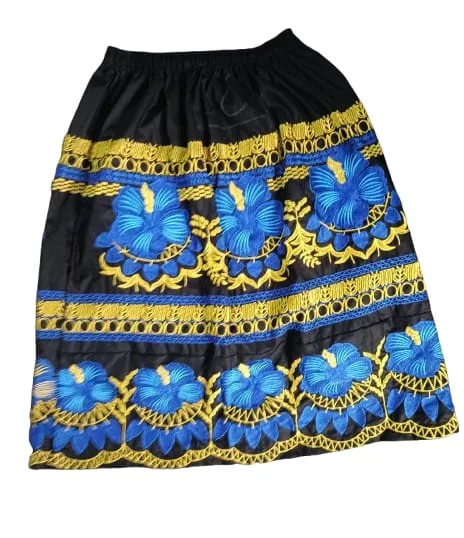
How do you iron different embroidered fabrics?
Cotton
Cotton handles higher heat, but the embroidery thread may not. NMSU suggests pressing cotton with steam or while it is slightly damp. Press dark cottons on the wrong side to avoid shine.
Polyester and polyester blends
Many modern island skirts and dresses use polyester because it holds colour well and resists wrinkles. Keep the iron on medium, press from the wrong side or use a pressing cloth, and avoid lingering too long in one spot.
Rayon
Rayon is soft and drapes beautifully but marks easily. NMSU advises a moderately warm iron with a press cloth and no direct steam.
Lace and scalloped edges
Lace trims can catch on the tip of the iron. Lay them flat on the towel, cover with the pressing cloth and press gently from the centre outwards. Never drag the iron across lace.
What mistakes damage embroidery when ironing?
- Ironing directly on the stitches: flattens texture and can leave a shine.
- Using the cotton setting on mixed fibres: polyester thread can glaze or melt.
- Sliding the iron back and forth: stretches the fabric and can pucker the area around the embroidery.
- Ironing over stains: heat can set marks permanently, so clean first.
- Ironing on a hard surface: without a towel underneath, the embroidery has nowhere to sink into.
- Over-wetting: soaking the garment can make some dyes run.
Can you avoid ironing embroidery altogether?
Often, yes. A few habits cut down on ironing:
- Remove garments from the washer promptly and hang or lay them flat to dry.
- Smooth the embroidery gently with your hands while it is still damp.
- Hang the garment in the bathroom while you shower; steam relaxes light creases.
- Use a handheld steamer held slightly away from the fabric, if the label allows steam.
- Store embroidered clothes carefully so they do not crease in the first place. Our guide to how to store embroidered clothes explains how.
For washing advice, see how to wash and care for Micronesian skirts.
Key takeaways
- Iron embroidery inside out, face down on a thick towel.
- Set the iron for the most delicate fibre in the garment.
- Use a pressing cloth and press with a lift-and-lower motion.
- Use light steam or a misted cloth only if the label allows.
- Let the garment cool before wearing or folding.
Frequently Asked Questions
Can you iron directly on embroidery?
It is best not to. Ironing directly on stitches flattens them and can cause shine. Turn the garment inside out and press it face down on a towel instead.
What setting should I use to iron embroidered polyester?
Use a medium setting. Canada’s care-symbol guide lists polyester under the medium setting, up to 150°C, and a pressing cloth adds extra protection.
Why do you put a towel under embroidery when ironing?
The towel acts as padding. The raised stitches sink into it, so the iron smooths the fabric around them without crushing the design.
Can I use steam on embroidered clothes?
Usually, if the care label allows it. Use light steam or mist a pressing cloth, and avoid direct steam on rayon.
How do I get wrinkles out of an embroidered skirt without an iron?
Hang it in a steamy bathroom, use a handheld steamer if the label allows, or smooth it by hand while damp after washing.
Ready for a new favourite? Browse our Micronesian-style skirts or see ideas for how to style a Micronesian skirt.
Sources and further reading
- Pressing Pointers (Guide C-309) – New Mexico State University
- Guide to apparel and textile care symbols – Government of Canada
Shop the Collection
Handmade Micronesian skirts, muumuus and island wear in sizes S–5XL, shipped worldwide.
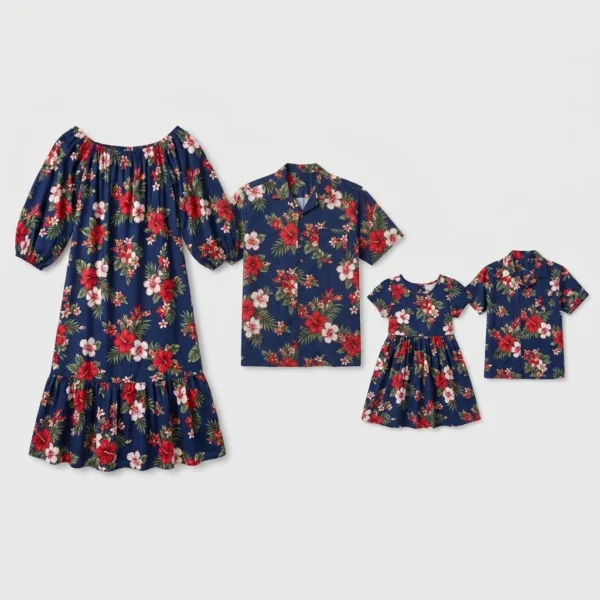
Hibiscus Reunion Matching Family Set
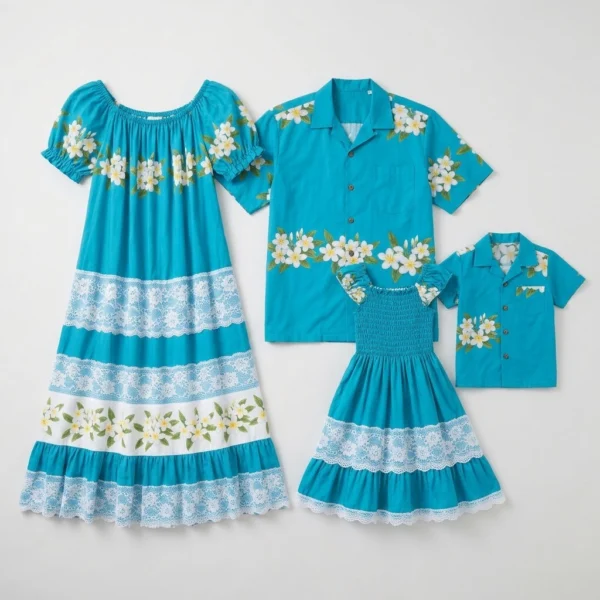
Price range: $12.00 through $18.00Plumeria Lagoon Matching Family Set
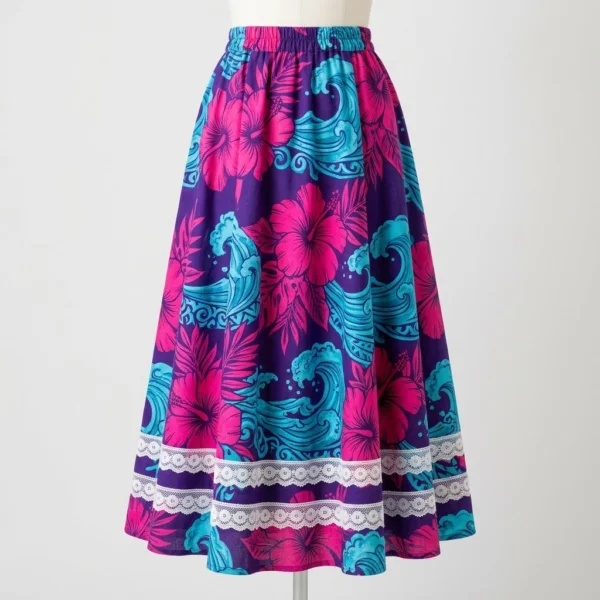
Price range: $12.00 through $18.00Pink Hibiscus Wave Micronesian Skirt
Original price was: $25.00.$20.00Current price is: $20.00.Royal Turtle & Plumeria Matching Family Set
Price range: $12.00 through $18.00