Kosrae is the easternmost state of the Federated States of Micronesia and the smallest by area. Seen from the sea, the outline of its mountains looks like a woman lying on her back, which is why it is known as the Island of the Sleeping Lady.
Kosrae has its own language, its own history and a way of life shaped strongly by faith, family and feasting. This guide introduces the traditions that make Kosraean culture distinct, so you can understand and appreciate them, whether you have Kosraean roots or simply want to learn.
What is Kosrae culture known for?
Kosrae culture is best known for its deep Christian faith, with the village church at the centre of public life, strict Sunday observance and beautiful hymn singing. It is also rooted in a long chiefly history, visible in the stone ruins of Leluh, and in close family ties celebrated through large feasts.
Why is Kosrae called the Island of the Sleeping Lady?
When the island is viewed from the east, its mountain ridges form the shape of a reclining woman. The highest point, Mount Finkol, rises to 634 metres. Kosraean storytellers have their own legends about the Sleeping Lady, and the image has become a much-loved symbol of the island.
What role does church play in Kosraean life?
Congregationalist missionaries set up their first mission on Kosrae in 1852, and nearly the whole island had converted by the 1870s. Today several Christian denominations are present, and Kosraeans are known across Micronesia for their strong religious commitment.
Village churches and church work
Each village has its own church, pastor and deacons, along with many committees. Being an active member involves what Kosraeans describe as church “work”: attending regularly, joining social functions, living a clean moral life and supporting church activities and buildings. Holding a church office brings considerable respect.
Sunday observance
Sunday is kept as a day of rest and worship. Services are held in the morning, afternoon and evening, and travel writers have noted that activities such as hiking, diving and swimming are avoided on Sundays. If you visit, plan quiet activities for that day and dress modestly. Our guide to what to wear to a Micronesian church service has practical tips.
Hymns and choirs
Singing is one of the great joys of Kosraean worship. Kosraeans are known for composing new hymns, which are performed at church events, especially at the end of the year. Village choirs can be friendly rivals, each trying to outdo the other with its performance.
What are the Leluh ruins?
On Lelu Island, just off Kosrae’s east coast, stand the remains of a walled stone city that was home to the island’s rulers and their households. Leluh was occupied from about 1250 to 1850 AD and at its height housed around 1,500 people across roughly 27 hectares.
The builders moved large basalt stones from the main island to create houses, plazas and ceremonial burial structures, and dug canals so canoes could reach the city. Leluh is often compared with Nan Madol on Pohnpei, the other great stone complex of eastern Micronesia.
What was traditional Kosraean society like?
Before contact with outsiders, Kosraean society was highly stratified. People belonged to matrilineal clans, and a class of nobles controlled the land, which commoners worked. Families lived in small groups of close relatives who shared a cookhouse.
The island’s history also includes Spanish, German and Japanese rule, followed by US administration as part of the Trust Territory of the Pacific Islands. Kosrae became a separate district in 1977 and joined the FSM as one of its four states.
What traditional foods are eaten on Kosrae?
Food is central to every Kosraean celebration. Traditional and everyday foods include:
- Breadfruit – the historic staple, once preserved in leaf-lined pits for times of scarcity
- Fahfah – a pounded taro feast dish traditionally prepared by trained men
- Pork – still an important feast food
- Fish and mangrove crab – from the lagoon and mangroves
- Fruit – limes, tangerines, mountain apples, papayas, pineapples and many kinds of banana
Today families also rely on imported rice and tinned foods, but fahfah and pork remain essential at feasts.
What are the biggest celebrations on Kosrae?
The largest gatherings on the island are year-end church events, weddings and funerals. Church and community feasts can take weeks to prepare. Other important occasions include Christmas, Liberation Day, which marks the end of Japanese control during the Second World War, installation days for new church officers and the dedication of new church buildings, which become island-wide events.
Funerals
Funerals are elaborate and deeply communal. The body traditionally lies in state for three days, usually at the home of a close male relative, while family and friends visit to pay respects and comfort the bereaved. Close relatives provide large amounts of food for the many guests.
What arts and crafts come from Kosrae?
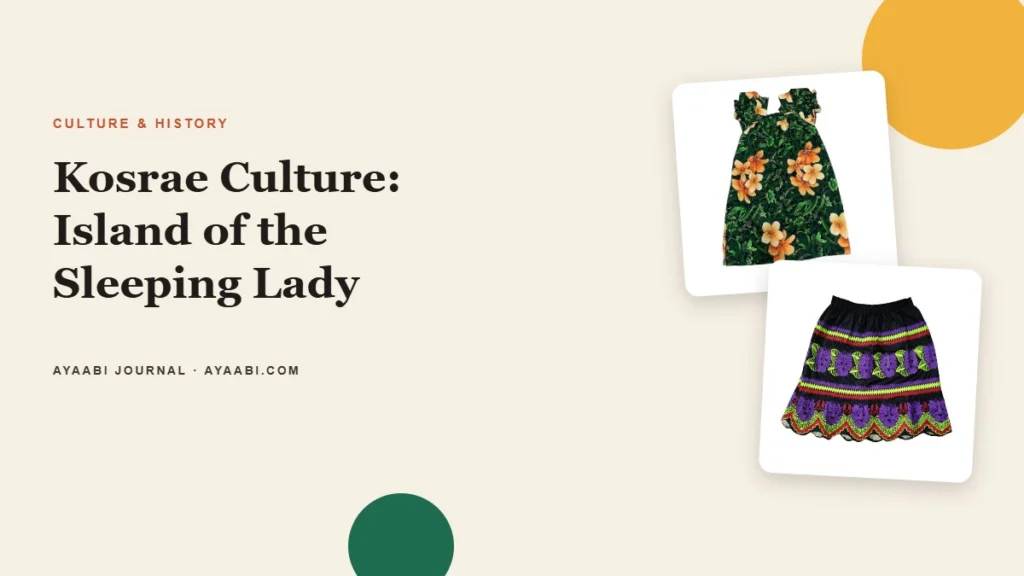
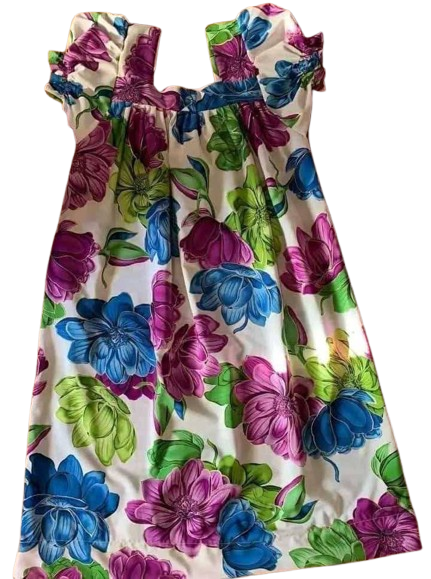
In earlier times Kosraeans decorated their bodies with tattoos, wove dyed pandanus leaves into mats and clothing with geometric patterns, and made very fine belts from dyed banana fibre. Mat weaving continues today. Women also sew dresses for ceremonial occasions. If you are interested in island dress more broadly, read what is a muumuu dress and our overview of Micronesian traditional attire.
Key takeaways
- Kosrae is the Island of the Sleeping Lady, named after its mountain silhouette.
- Church is the centre of public life, with strict Sunday observance and rich hymn singing.
- The Leluh ruins were the seat of Kosrae’s rulers from about 1250 to 1850.
- Feasts with fahfah and pork mark weddings, funerals and church events.
- Kosraean culture is distinct from Pohnpei, Chuuk and Yap, with its own language and customs.
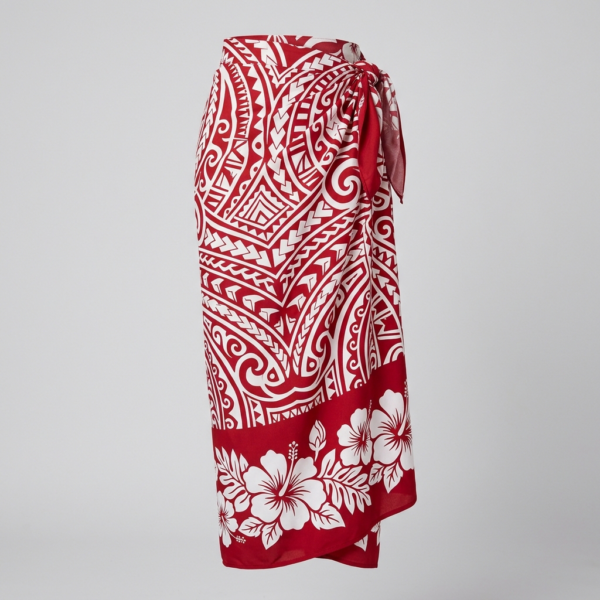
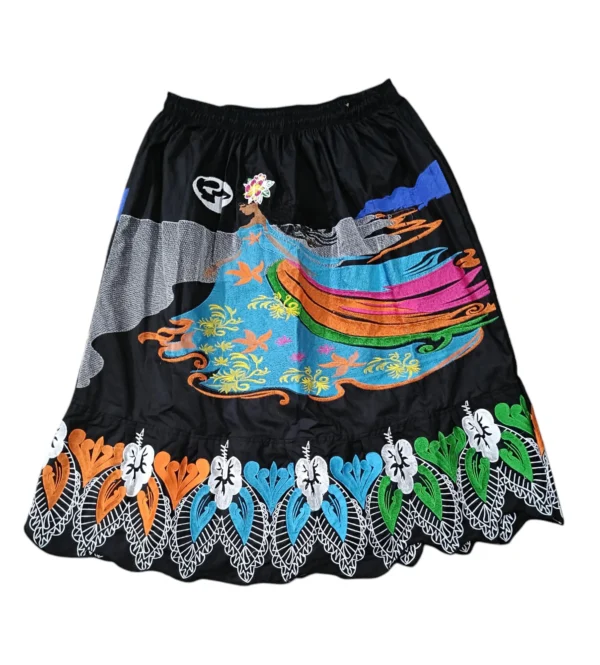
Dressing for a Kosraean church event or family celebration? Browse our muumuu dresses and Micronesian skirts, in sizes Small to 5XL.
Frequently Asked Questions
Where is Kosrae?
Kosrae is a volcanic island in the eastern Caroline Islands, about 600 kilometres north of the equator. It is the easternmost and smallest state of the Federated States of Micronesia.
What language is spoken on Kosrae?
Kosraean is the official language of Kosrae State, and English may also be used in government.
What religion is Kosrae?
Kosrae is overwhelmingly Christian. Congregationalist missionaries arrived in 1852, and the church remains the centre of community life.
What is fahfah?
Fahfah is a traditional Kosraean feast dish made from pounded taro, traditionally prepared by trained men for special occasions.
Can you visit the Leluh ruins?
The ruins on Lelu Island are one of Kosrae’s best-known historic sites. Ask locally about access and guides before you go, and treat the site with respect.
Sources and further reading
- Wikipedia: Kosrae
- Countries and Their Cultures: Kosrae, Religion and Expressive Culture
- Frommer’s: Like the islands used to be, a quick trip to Kosrae
Shop the Collection
Handmade Micronesian skirts, muumuus and island wear in sizes S–5XL, shipped worldwide.
-
Purple Floral Micronesian Skirt
Original price was: $25.00.$20.00Current price is: $20.00. -
Red Tribal Lavalava
$16.00 -
Island Queen Pohnpeian Skirt
Original price was: $25.00.$20.00Current price is: $20.00. -
Volcanic Shell Weave T-Shirt
Original price was: $14.00.$12.00Current price is: $12.00.