Whether you have a Chuukese mother-in-law, new co-workers from Chuuk, or friends at church who switch into Chuukese when the conversation gets lively, learning a few words is one of the warmest ways to show respect. You do not need to be fluent. A greeting and a sincere thank you go a long way.
This short guide sticks to Chuukese phrases we could check against published university material, so you are not learning a mistake. We also explain why you will see different spellings, and share a few etiquette tips that matter just as much as the words.
What are the most useful Chuukese phrases for beginners?
The most useful Chuukese phrases for beginners are Ran annim (a greeting that also works as a farewell), Kinisou (thank you, also written Killisou), Kose mochen (please) and Itei… (my name is…). Learn these four first, say them with a smile, and listen to how local speakers pronounce them.
What is the Chuukese language?
Chuukese is the language of Chuuk State in the Federated States of Micronesia, in the Caroline Islands. It belongs to the Micronesian branch of the Oceanic languages, within the larger Austronesian family. According to Wikipedia’s summary of census data, it had around 51,000 native speakers in 2000, and there are also Chuukese-speaking communities on Pohnpei and Guam.
Chuukese is an official language of Chuuk, while English is the official language of the FSM government and commerce. A cultural reference guide from the Southeastern National Tuberculosis Center notes that most Micronesians speak English as a second language, and that Micronesian languages carry social structure, history and traditional knowledge that is often passed on orally.
Basic Chuukese greetings and phrases
Each phrase below appears in a published university source (listed at the end of this article). Where two spellings appear, both are shown.
Ran annim / Ran allim: hello and goodbye
Ran annim is the everyday greeting, and the University of Florida-hosted cultural guide notes it is used for both hello and farewell. A University of Hawaiʻi language card spells it Ran allim. It is a friendly, all-purpose phrase.
Kinisou / Killisou: thank you
This is the word you will use most. The University of Hawaiʻi card ends with Killisou for “thank you”, and you will also commonly see it written Kinisou. Say it to the aunty who hands you a plate at a party and you will likely get a big smile back.
Kose mochen: please
On the same card, a polite request begins with Kose mochen, which is how you say “please”. It softens any request and shows good manners.
Itei…: my name is…
The card opens with Ran allim, itei…, meaning “Greetings, my name is…”. To introduce yourself, simply say Itei followed by your name.
Kapasen Chuuk: the Chuukese language
The heading on the University of Hawaiʻi card is Kapasen Chuuk, the name for the Chuukese language. The card also uses fosun Chuuk in the sentence “I speak Chuukese”. Knowing what the language is called is handy when you ask someone to teach you more.
A bonus food word: mai
The cultural reference guide lists mai as the Chuukese word for breadfruit, a staple across much of Micronesia. It is a fun word to recognise when food is being shared.
Quick reference: Chuukese phrases to practise
- Ran annim (also Ran allim): greeting and farewell
- Kinisou (also Killisou): thank you
- Kose mochen: please
- Itei…: my name is…
- Kapasen Chuuk: the Chuukese language
- Mai: breadfruit
Why are Chuukese words spelled in different ways?
You will notice that the same word can appear as Ran annim or Ran allim, and Kinisou or Killisou. Chuukese has more than one spelling tradition, and writers do not always agree. Even the name of the islands changed: Wikipedia explains that “Truk” and “Chuuk” are the same word, with the older tr spelling replaced by ch.
Chuukese is also unusual in allowing doubled consonants at the very start of words, a sound feature most of its relatives have lost. That is one reason pronunciation is best learnt by listening rather than reading. Ask a Chuukese speaker to say a phrase and repeat after them; most people are delighted to help.

What etiquette should you know when speaking with Chuukese elders?
Words matter, but so does how you use them. The Southeastern National Tuberculosis Center’s cultural guide to Chuuk highlights several customs worth knowing:
- Greet first. Introductions should come before conversation, and should respect social rank and age.
- Use titles. Using a person’s correct title is important. A title with a last name, or the title alone, is fine.
- Take off your sunglasses when speaking with someone, and make polite eye contact during greetings.
- Read quiet signals. A slight raise of the head or a smile can mean agreement, while silence may mean disagreement or confusion.
- Avoid rude gestures such as frowning, winking or turning away from the person speaking.
The guide also notes that Chuuk is a matrilineal society, so family members may have different surnames, and that family, church and community are comfortable topics of conversation.
How can you keep learning Chuukese?
- Practise one phrase a week until it feels natural, starting with Ran annim and Kinisou.
- Ask a Chuukese friend or relative to correct your pronunciation. Spelling varies, so trust the ear.
- Join cultural events in your community, where you will hear the language used naturally.
- Look for Chuukese classes through community organisations or universities in your area.
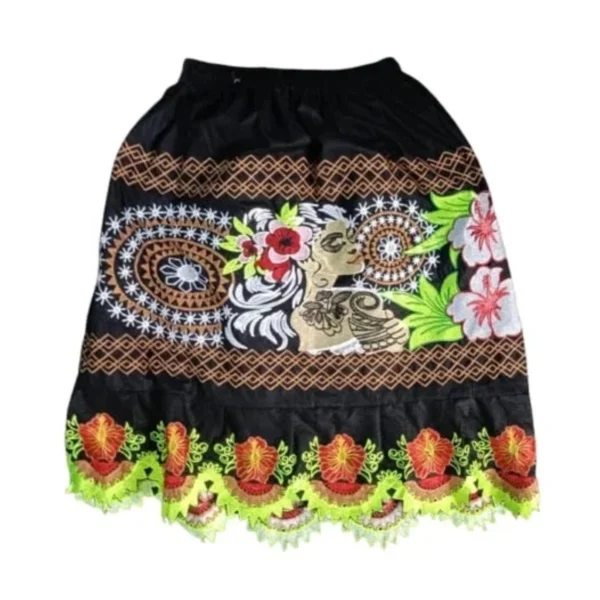
Language and clothing often go hand in hand at cultural events. If you want to understand the story behind the bright skirts you see at Chuukese gatherings, read our guide to Chuukese skirt history and culture, or explore Micronesian traditional attire more broadly.
Key takeaways
- Start with Ran annim (hello or goodbye) and Kinisou (thank you).
- Add Kose mochen (please) and Itei… (my name is…) to introduce yourself politely.
- Spellings vary, so learn pronunciation by listening to native speakers.
- Respect, titles and greeting elders first matter as much as vocabulary.
Heading to a Chuukese celebration? Browse our Micronesian-style skirts and island T-shirts, available in sizes Small to 5XL.
Frequently Asked Questions
How do you say hello in Chuukese?
The common greeting is “Ran annim”, also spelled “Ran allim”. It can be used both to say hello and to say goodbye.
How do you say thank you in Chuukese?
Thank you is “Kinisou”, also written “Killisou” in some materials, such as a University of Hawaiʻi language card.
Is Chuukese the same as Pohnpeian?
No. Both are Micronesian languages, but they are different languages. Chuukese is spoken mainly in Chuuk State, and Pohnpeian in Pohnpei State.
Why is it sometimes called Trukese?
“Truk” is the older spelling of Chuuk. The two names refer to the same place, and older books and dictionaries often use “Trukese” for the language.
Where is Chuukese spoken?
Chuukese is spoken mainly in Chuuk State in the Federated States of Micronesia, with communities of speakers on Pohnpei and Guam.
Sources and further reading
- University of Hawaiʻi: Chuukese Language ID Card (PDF)
- Southeastern National Tuberculosis Center (University of Florida): Cultural Quick Reference Guide, Chuuk (PDF)
- Wikipedia: Chuukese language
Shop the Collection
Handmade Micronesian skirts, muumuus and island wear in sizes S–5XL, shipped worldwide.
Island Sunset Canoe T-Shirt
Original price was: $14.00.$12.00Current price is: $12.00.Emerald Plumeria Ruffle Chuukese Skirt
Original price was: $25.00.$20.00Current price is: $20.00.Red Ginger Men’s Aloha Shirt
Original price was: $22.00.$18.00Current price is: $18.00.