

Few garments say “Micronesian community” as clearly as the Chuukese skirt. Long, bright and full of movement, it is worn to church on Sunday, to birthdays and funerals, to the market and around the house. If you are buying one for the first time, for yourself or as a gift, the choice can feel overwhelming: lace or ruffles, printed or embroidered, which length, which size?
This guide walks you through the main styles, how a Chuukese skirt should fit, which fabrics work best for different occasions, and how to pick the right size, so you can buy with confidence. If you want the background first, read our guide to the history and meaning of the Chuukese skirt.
What Makes a Skirt “Chuukese”?
Chuukese skirts come from Chuuk State in the Federated States of Micronesia and are now worn by Chuukese families in Guam, Hawaii and across the United States. A few features set them apart:
- Length: they are long, usually reaching from mid-calf to the ankle, because covering the thighs is an important part of modesty in Chuukese culture.
- Fullness: the fabric is gathered at the waist, giving a full, swinging shape.
- Decoration: bands of lace, ribbon, ruffles, prints or embroidery, often in several rows near the hem.
- Colour: bold, cheerful colours such as red, turquoise, yellow, royal blue and pink are the norm.
They are close cousins of the embroidered Pohnpeian skirt (the urohs), but Chuukese styles tend to lean more on lace, ribbon and tiered ruffles, while Pohnpeian skirts are known for dense, colourful floral embroidery. Many families own both.
The Main Chuukese Skirt Styles
1. Lace tier skirts
Rows of white or cream lace run across a solid colour, sometimes with a printed flower band between them. Lace skirts look dressy and are a favourite for church, weddings and graduations.
2. Ruffle hem skirts
A single or double ruffle at the hem, often edged with contrasting ribbon, adds swing and fun. Ruffle skirts are popular for birthdays, parties and dancing.
3. Printed floral skirts
Hibiscus, plumeria and leaf prints cover the whole skirt. They are easy to wear, easy to wash and great for everyday use.
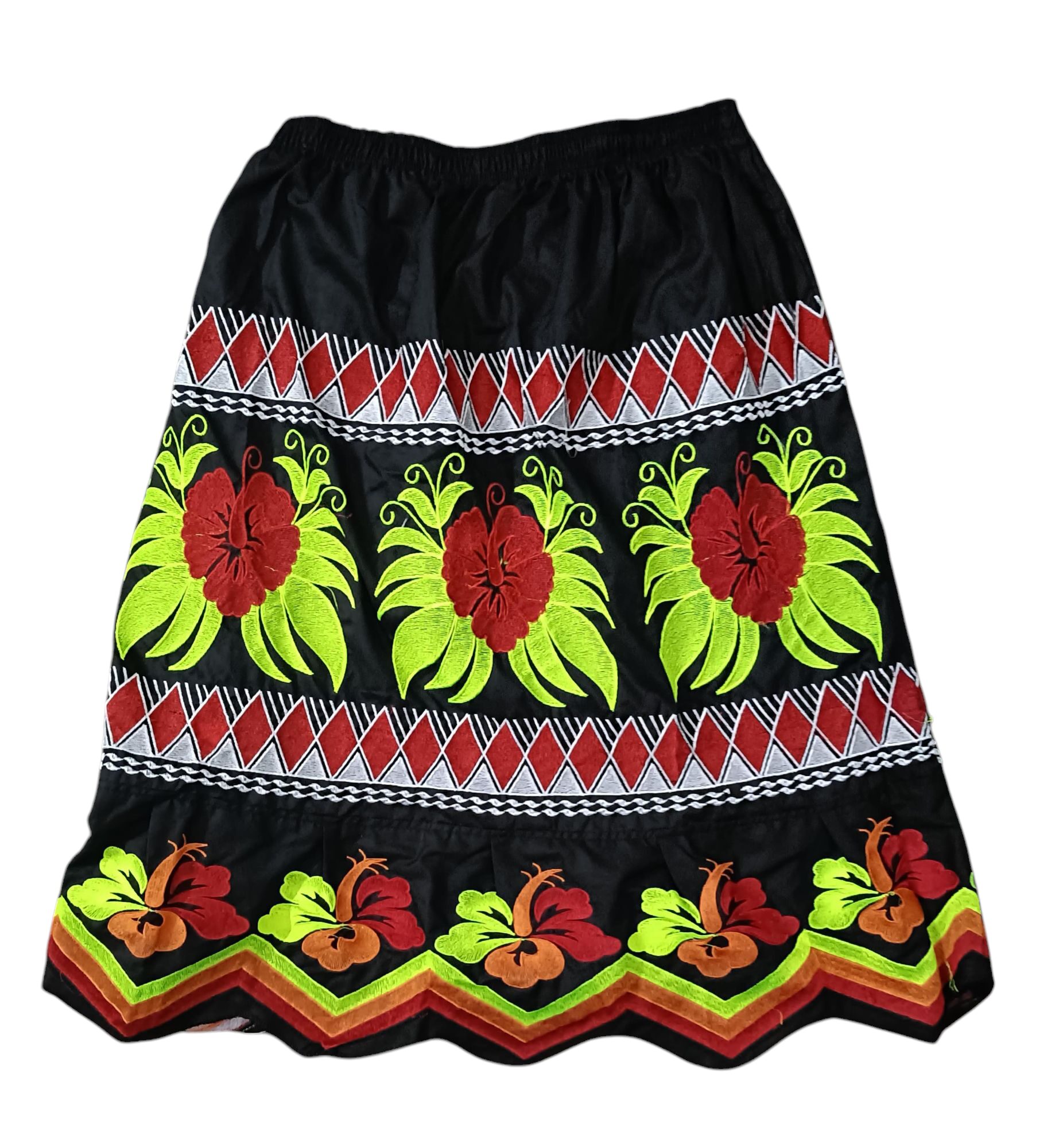
4. Embroidered skirts
Machine embroidery in rows of flowers and geometric bands makes these the most eye-catching style. Embroidered skirts take more work to make, so they usually cost a little more, but they last for years with good care.
How Should a Chuukese Skirt Fit?
- Waist: most skirts have an elastic waistband. It should sit comfortably at your natural waist without digging in or sliding down.
- Length: for a traditional look the hem should fall between mid-calf and ankle. If you are petite, check the length so the skirt does not drag.
- Movement: you should be able to walk, sit on the floor and climb stairs easily. A full, gathered cut makes this simple.
- Underskirt: lighter fabrics are often worn with a slip or underskirt for extra coverage.
Choosing the Right Size
Because most Chuukese skirts use an elastic waist, sizing is forgiving. Measure around your natural waist and around the widest part of your hips, then choose the size that fits your hips comfortably, since the elastic will adjust at the waist. At Ayaabi our skirts come in sizes Small to 5XL. If you are between sizes, go up one size for a looser, more traditional drape.
Fabric and Comfort
Look for lightweight, breathable fabrics that hold their colour. Smooth polyester blends resist wrinkles and dry quickly, which is handy for travel and busy family events. Softer, lighter fabrics feel cooler in hot weather. Whatever the fabric, check that lace and ribbon are stitched on securely, especially at the hem, which takes the most wear.
Matching the Skirt to the Occasion
- Church: lace tier or embroidered skirts in solid colours, paired with a modest blouse. See our guide on what to wear to a Micronesian church service.
- Weddings and graduations: your dressiest lace or embroidered skirt, often in white, cream or the family’s chosen colour.
- Birthdays and parties: ruffle skirts and bright prints.
- Everyday: printed skirts that are easy to wash.
For more outfit ideas, read how to style a Micronesian skirt.

Caring for Your Chuukese Skirt
Wash in cold water, inside out, on a gentle cycle or by hand, and hang to dry out of strong sun so the colours stay bright. Iron on low and avoid ironing directly on lace or embroidery. Our full Micronesian skirt care guide has step-by-step tips.
Where to Buy
You can browse our Micronesian and Pohnpeian skirts now, and our new Chuukese skirt collection is now live, with lace tier and ruffle styles in sizes Small to 5XL and worldwide shipping.
Frequently Asked Questions
What is a Chuukese skirt?
A Chuukese skirt is a long, full, brightly decorated skirt worn by women from Chuuk State in the Federated States of Micronesia and by Chuukese communities abroad. It is usually gathered at the waist and decorated with lace, ribbon, ruffles, prints or embroidery.
How long should a Chuukese skirt be?
A traditional Chuukese skirt falls between mid-calf and the ankle, keeping the thighs and knees covered.
What is the difference between a Chuukese and a Pohnpeian skirt?
Both are long and colourful. Chuukese skirts often feature lace, ribbon and ruffles, while Pohnpeian skirts (urohs) are known for dense floral embroidery.
How do I choose my size?
Measure your hips and choose the size that fits them comfortably. The elastic waist adjusts to your waist. If you are between sizes, choose the larger size.
Can non-Micronesians wear a Chuukese skirt?
Yes. Wearing a Chuukese skirt respectfully, especially when invited to a Micronesian event, is generally welcomed. Keep the hem long and learn a little about the culture behind it.